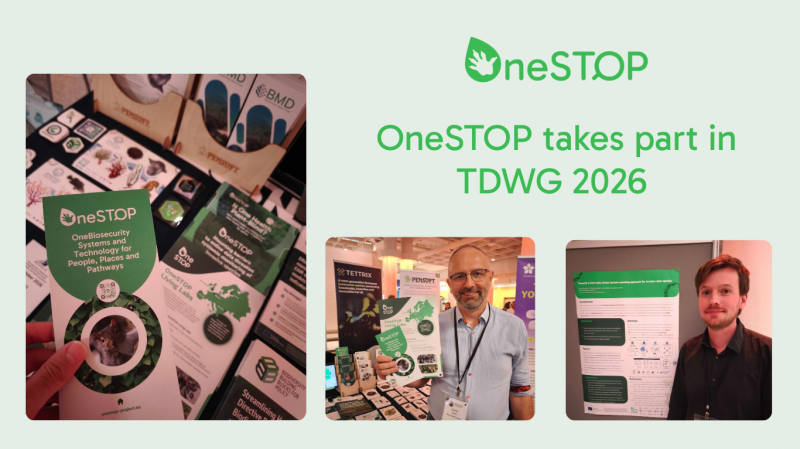
Key moments from OneSTOP’s participation in TDWG 2026
OneSTOP was showcased at the Biodiversity Information Standards (TDWG) Annual Conference, which took place from 21 to 25 September in Oslo, Norway. The conference was themed “Research and Robot-ready Biodiversity Data Standards” and brought together researchers, project leaders, and students for discussions on topics ranging from taxonomy and biodiversity infrastructures to community science and knowledge extraction.
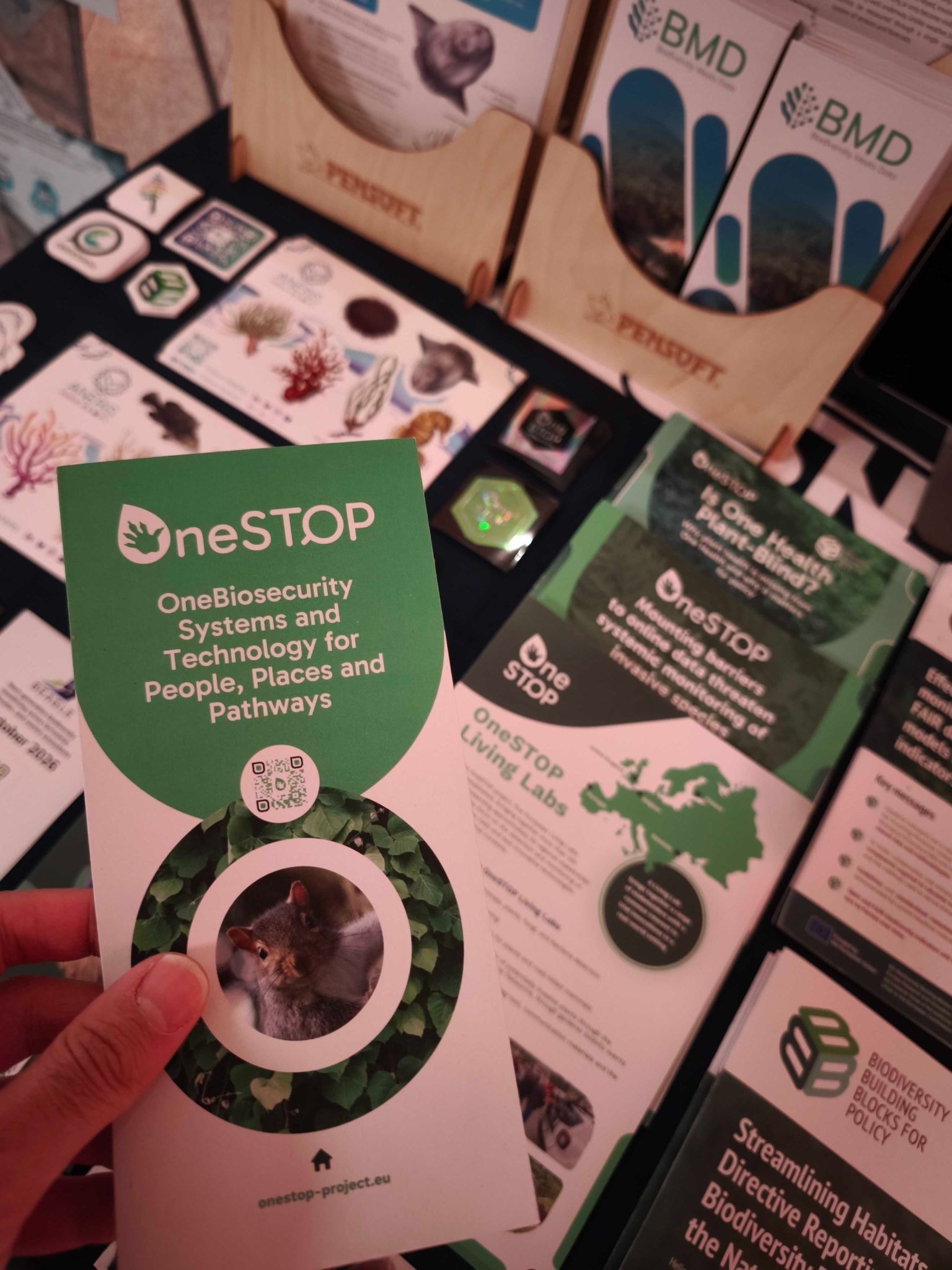
During the event, OneSTOP materials were available at the booth hosted by BMD, TETTRIX, ANERIS, and Pensoft Publishers.
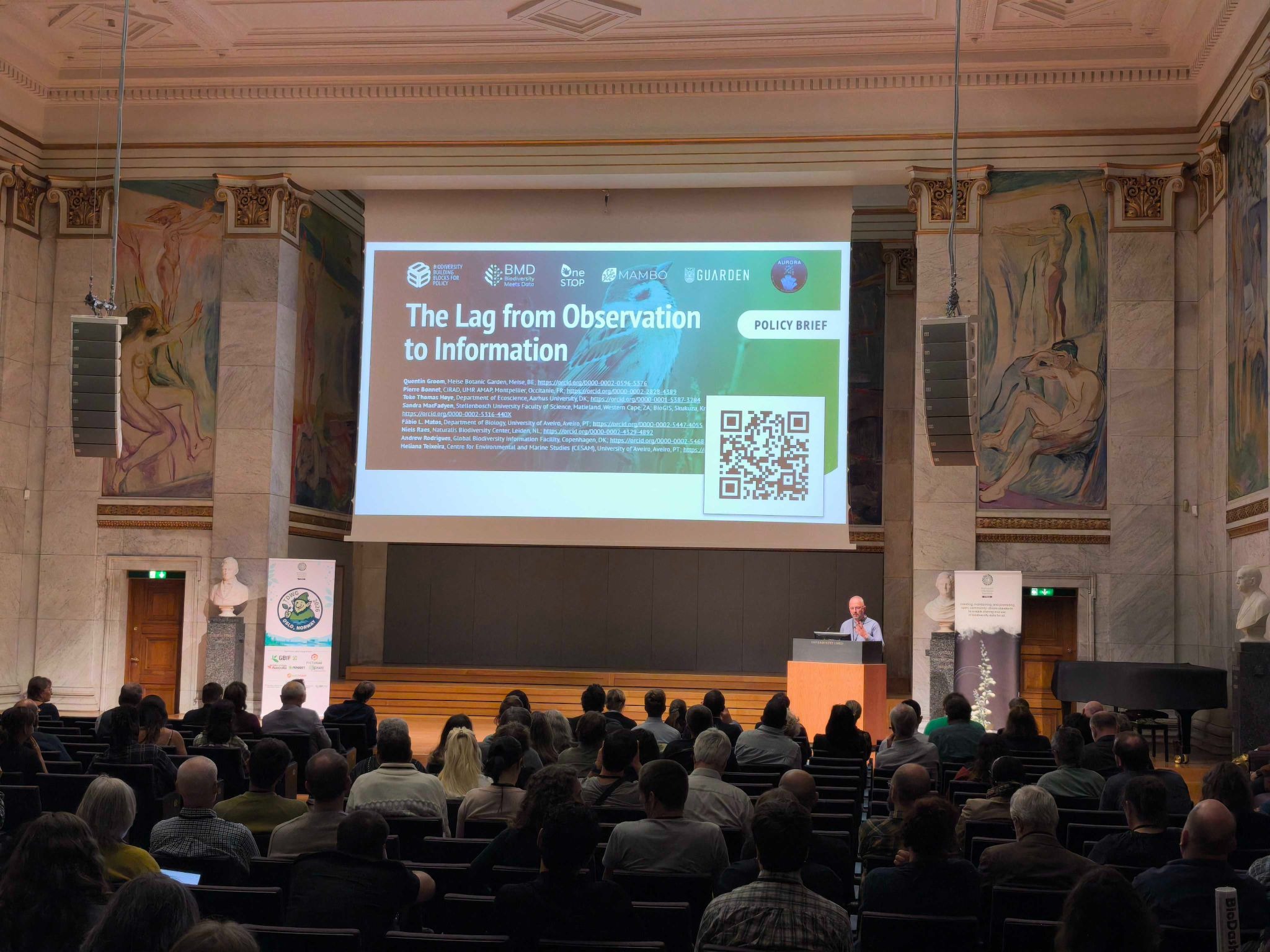
A highlight was our joint policy brief with BMD, B3, MAMBO, GUARDEN and AURORA on the data lag from observation to information, which was introduced by our coordinator, Quentin Groom, in the session “Reducing the Lag from Observation to Information”. During his talk, he explained that biodiversity data are being collected at an unprecedented scale, but that delays can still arise during mobilisation, validation, integration, analysis and interpretation. Reducing this lag means improving the whole information pipeline, not simply collecting more data.
In addition, Simon Reynaert (Meise Botanic Garden) presented a poster on the data-driven horizon scanning tool OneSTOP is developing. Horizon scanning, used to prioritise monitoring and management of emerging invaders, has so far relied largely on expert round-table discussions and qualitative scoring, which are slow, costly and prone to group-specific biases. The poster highlighted that OneSTOP’s approach uses a graph neural network that combines open data on species interactions, climate-niche matching, trade pathways and the presence of ecological partners to predict which alien species are most likely to become established in a given country. The model has already reconstructed past invasions across 39,700 alien taxa with high accuracy.