Discover how Species Distribution Models help track invasive alien species in a new OneSTOP video
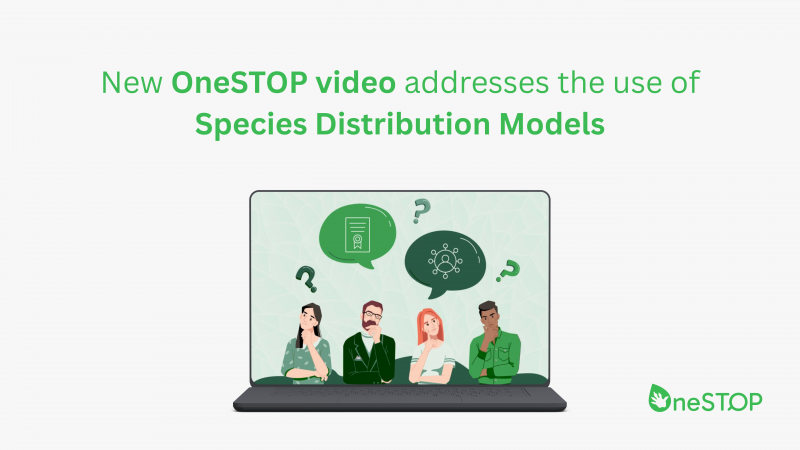
OneSTOP has published a new animated video introducing the concept of Species Distribution Models and how they are used by the project to help prioritise invasive alien species (IAS).
The spread of IAS is threatening biodiversity and human well-being across Europe. To battle this challenge, policymakers and natural site managers need to determine the right course of action quickly and based on up-to-date evidence. However, this decision raises multiple other important questions: which species to prioritise, how to identify the ones causing the most damage, and what areas are most vulnerable based on the preselected conditions. SDMs can provide valuable information about these concerns and help stakeholders make evidence-based decisions.
OneSTOP is currently developing a data-driven prioritisation system, which uses SDMs, to enhance the management of IAS. SDMs combine IAS distribution data with spatial data illustrating land use and climate conditions to make predictions on IAS spread. OneSTOP then transforms these complex data into readable and easily accessible maps, used for early risk prevention, available in an online SDM Map Gallery. The maps track a total of 120 species and are beneficial to researchers, policymakers, and EU and national authorities, with their transparent and reusable modelling outputs.
However, as OneSTOP partner Joanna Vicente from CIBIO-BIOPOLIS points out in our video, the outputs from SDMs need to be taken with a grain of salt due to the degree of uncertainty that comes with prediction models. That’s why SDMs can only be used as a support system rather than a final decision-maker, Vicente notes.
To learn more about SDMs and their role in OneSTOP, watch our animated video available on YouTube.